


As global dependence on satellites continues to grow, so too does the risk of cyber attacks against space systems and the critical infrastructure they support.
Almost 240 cyber incidents have targeted the space sector in the past two years, according to the Centre for Security Studies in Zurich, highlighting a rapidly escalating threat.
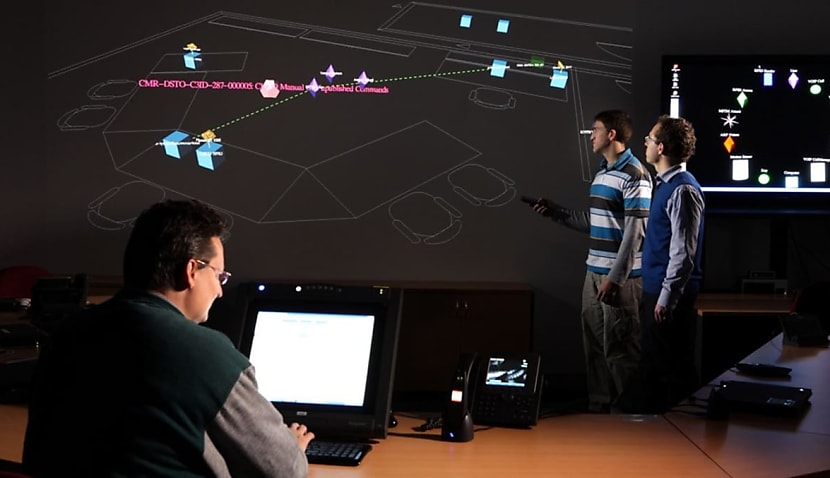
The interactive platform uses game design principles to improve how cyber security teams interpret and act on cyber threat intelligence (CTI), enabling them to better anticipate, withstand and recover from attacks that could disrupt essential satellite-enabled services.
The project is led by UniSA researchers Mona Kriesten, Dr Mamello Thinyane and Dr David Ormrod, who said the tool addresses a critical gap between the availability of CTI and its effective use in operational decision making.
CTI provides organisations with analysed and contextual information about potential or active cyber threats. While it is commonly used to respond to incidents after they occur, the UniSA team argues its greatest value lies in proactive defence – particularly within satellite supply chains, where early warning and rapid decision making are crucial.
Kriesten, a cyber security practitioner completing her PhD at UniSA, said organisations often struggle to convert CTI insights into timely action.
“Gamification creates a safe but realistic environment where security teams can practise making decisions under pressure, using cyber threat intelligence to guide their responses,” she said.
The game is built around a highly realistic satellite cyber supply chain scenario, drawing directly on tactics used in real-world incidents. These include the SolarWinds supply chain compromise and the ViaSat satellite modem attack linked to the war in Ukraine.
By modelling a complete attack life cycle, from an initial covert breach through to disruption of satellite services, the game challenges players to respond to escalating threats using different forms of CTI, including strategic, operational and tactical intelligence.
Players’ decisions determine how effectively the simulated system anticipates, avoids, withstands and recovers from the attack, as well as how it adapts in the aftermath.
To ensure realism and relevance, the researchers used an iterative, expert-informed design process. Cyber security professionals, CTI analysts, space systems engineers and game designers were all involved in refining the game’s narrative, intelligence cues and decision pathways.
The result is a user-focused decision support and analysis tool that can identify skill gaps, test response strategies and improve understanding of the growing complexity of satellite cyber supply chains.
UniSA Optus chair in cyber security Associate Professor Mamello Thinyane said the human element of cyber resilience is often undervalued.
“Technology can only do so much,” he said. “In the end, it’s people who make the decisions that determine whether a system survives an attack. Gamification provides a low-risk way to strengthen those human skills.”
As part of the research, the team also developed a new cyber resilience life cycle model, adapted from existing international frameworks. The model defines six phases of resilience and shows how CTI can support defenders at each stage.
“The life cycle helps players understand what good decision making looks like throughout an incident,” Kriesten said.
The researchers believe the approach has strong potential for broader use in training, analysis and future development. Options under consideration include multiplayer formats, additional attack scenarios and more refined measures of CTI quality.
According to Thinyane, the timing of the research is critical, “As more governments and commercial operators expand their presence in space, the attack surface continues to grow,” he said.
“Building cyber resilience is essential to protecting national security, commercial interests and the public services that rely on space systems,” Thinyane added.
The UniSA project is among the first globally to apply gamification specifically to cyber threat intelligence within satellite cyber supply chains.