


Australia’s next space breakthrough probably isn’t happening in orbit. It’s happening in a vineyard, council offices, bushfire labs, biomedical facilities, wherever founders are using space-enabled tools to solve real problems on Earth.
As the global space economy races toward a trillion-dollar valuation, Australia’s space sector is no longer confined to launch vehicles and satellites. Space has become an enabling layer, powering agriculture, disaster management, renewable energy, urban planning and advanced medicine.
Increasingly, the founders driving these innovations don’t always see themselves as space companies at all.
That’s the opportunity.
From orbit to everyday life: space tech’s quiet revolution
Once, space technology felt like a million miles away: distant, complex, costly, and reserved for governments and global primes. Today, it underpins the tools shaping everyday life.
Satellite imagery informs crop output. Space-based sensors track fires in real time. Remote intelligence guides renewable energy investment. Space data shapes cities before they’re built.
The most exciting part? Many of these founders didn’t start by building ‘a space company.’ They set out to solve a problem.
Take AICRAFT, for example. Initially developing space-grade technology, the team identified a completely new terrestrial application: viticulture. By pivoting into the wine industry, they now apply high-precision sensing and automation to optimise vineyard productivity and sustainability. Proof that space innovation can unlock value in Australia’s most traditional sectors.
Then there’s HEX20, established to find solutions for low earth orbit satellite applications, is now helping to monitor and fight bushfires using space-enabled intelligence. In a country where fire events are becoming more frequent and more destructive, this kind of innovation isn’t just commercially valuable, it’s nationally critical.
Espy Ocean uses advanced sensing and spatial data to support fishing operators better understand stock health, ocean conditions and sustainability. ZyntaxAI empowers urban planners, councils and governments with accessible space-derived intelligence, enabling future focused decision making without requiring technical expertise. And ResearchSat is taking biomedical research into microgravity, accelerating the development of next-generation pharmaceuticals from orbit.
These might be different industries and different customers, but there’s one unifying truth: space isn’t the end product, it’s the hidden engine driving innovation.
Where ideas become companies
South Australia has become the hub for space-enabled innovation. Turning an idea into a scalable company requires customers, strategy, capital and timing and this is where the Venture Catalyst Space program based in Adelaide’s CBD comes in.
AICRAFT, HEX20, Espy Ocean, ZyntaxAI and ResearchSat are all alumni of the program, which transforms space-enabled concepts into investable, scalable ventures while taking no equity or IP.
Over six months, founders gain access to:
- Expert commercialisation coaching
- Market validation and customer discovery
- Product and business model refinement
- Investor readiness and capital strategy
- Deep connections to ecosystem partners, researchers and industry leaders
- $10,000 stipend.
- For many participants, the biggest breakthrough isn’t technical, it’s a shift in perspective. Their technical innovation becomes a commercial solution to a painful, expensive, real-world problem.
That shift attracts customers and investment, moving research into revenue.
Venture Catalyst Space graduates aren’t just building prototypes, they’re gaining global attention going on to:
- Form strategic partnerships with international organisations
- Conduct trials with enterprise and government
- Attract domestic and international investment
- Scale pilots into commercial deployments
- Be recognised as leaders in emerging segments of the space-enabled economy.
Not a ‘space company’? That might be your advantage
A key message for 2026 is this:
You don’t have to call yourself a space startup to be in the space industry.
While upstream technology and more traditional space startups will always play an essential role in the space sector, there are opportunities that sit on both sides of the industry.
If your business uses satellite data, remote sensing, positioning, navigation or timing, space derived analytics, earth observation or communications infrastructure (to name a few), you’re already part of the space economy.
Australia’s next wave of space success will not be defined by rockets alone. It will be defined by founders applying space-enabled tools to agriculture, energy, climate, logistics, health, education, smart cities, environmental protection and national security.
Downstream technology is where growth is accelerating, and exactly where Venture Catalyst Space supports founders.
The future is already forming
Australia’s next space breakthrough is taking shape in labs, workshops, datasets and early-stage companies across the country.
From vineyards to cities, oceans to energy grids, fire zones to pharmaceuticals, the future of space-enabled innovation is not somewhere ‘out there’.
It’s being built right here.
Applications for Venture Catalyst Space 2026 are now open. Apply here.
The program is delivered by the Innovation & Collaboration Centre at Australia’s newest university, Adelaide University, which launches the largest space and defence research capability in the Southern Hemisphere when it opens its doors in January.
 Image 1: AICRAFT sign an MoU with TakeMe2Space at IAC 2025 in Sydney. Photo supplied by the South Australian Space Industry Centre
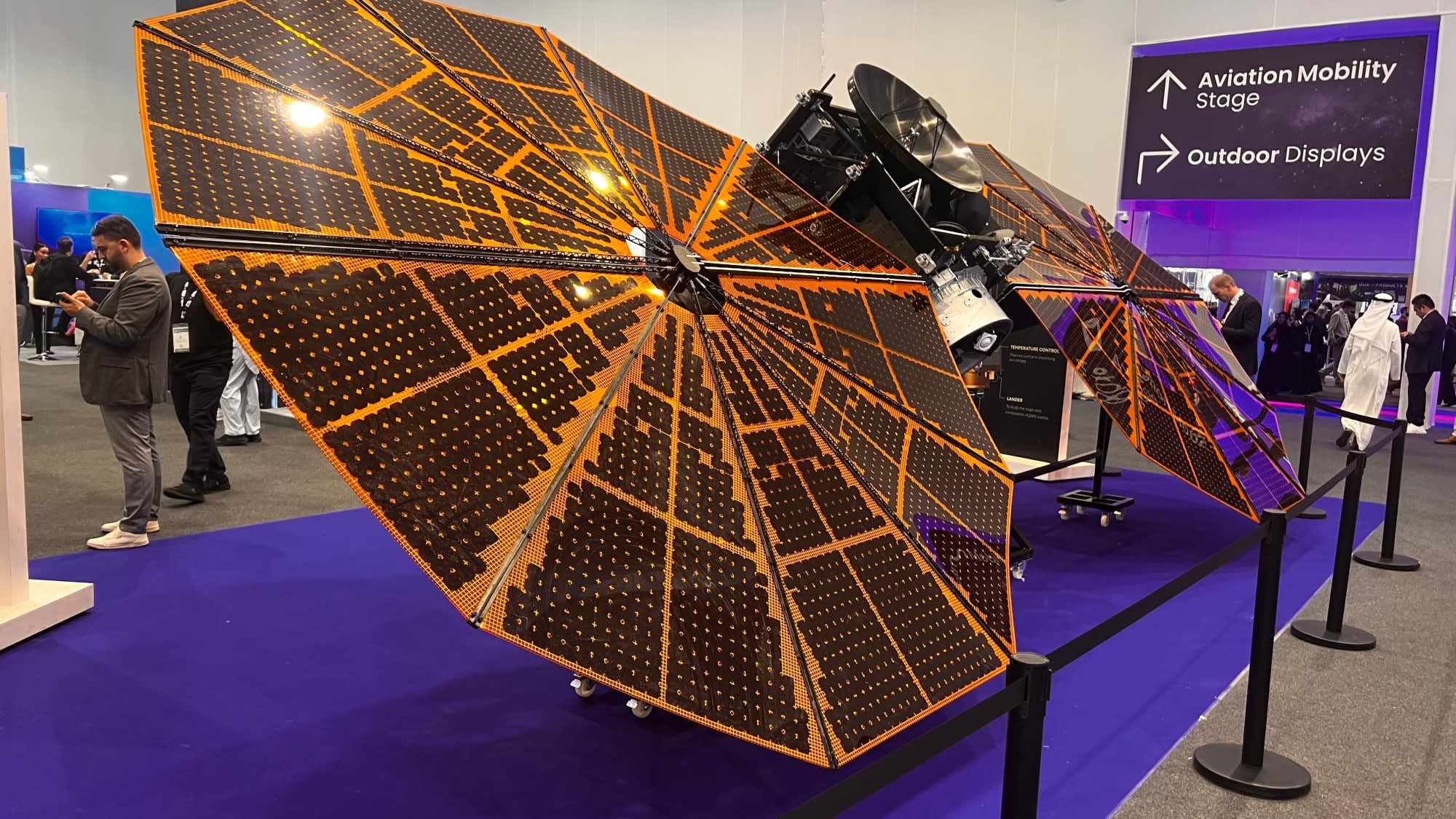 Image 2: At the Dubai Airshow, HEX20 joined the UAE Space Agency to showcase the advanced Asteroid Lander being developed for the Emirates Mission to the Asteroid Belt (EMA)—a path-breaking mission that will travel 3.6 billion kilometres to unlock insights into the origins of the solar system.
 Image 3: AICRAFT's space model of a high-performance AI computer for satellites
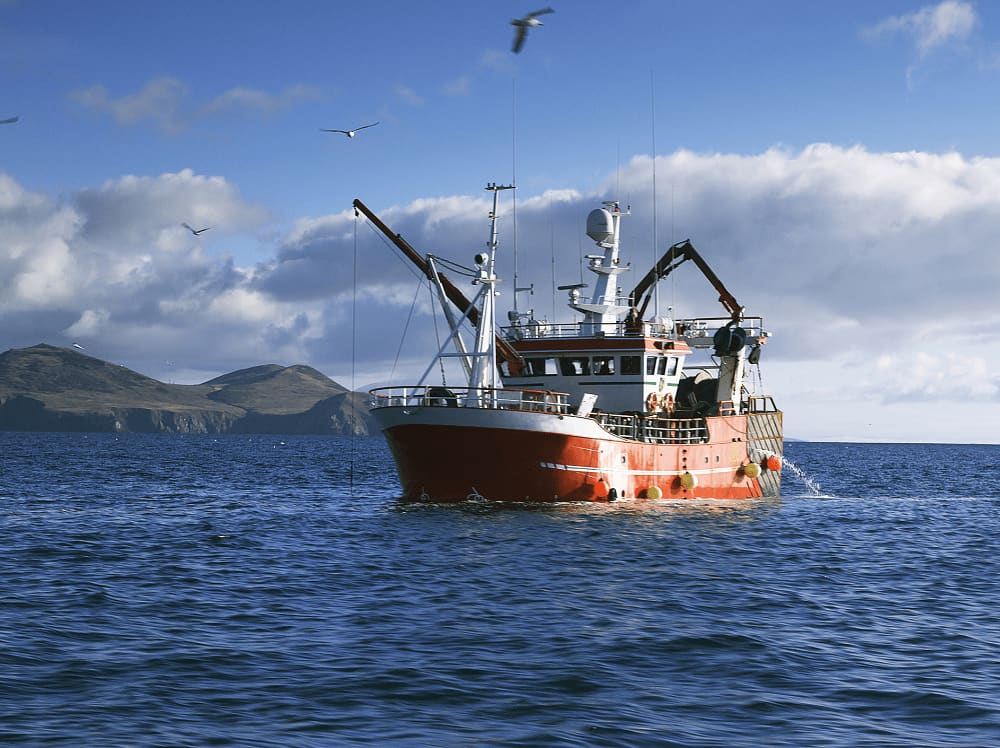 Image 4: Espy Ocean are using advanced sensing and spatial data to support fishing operators