


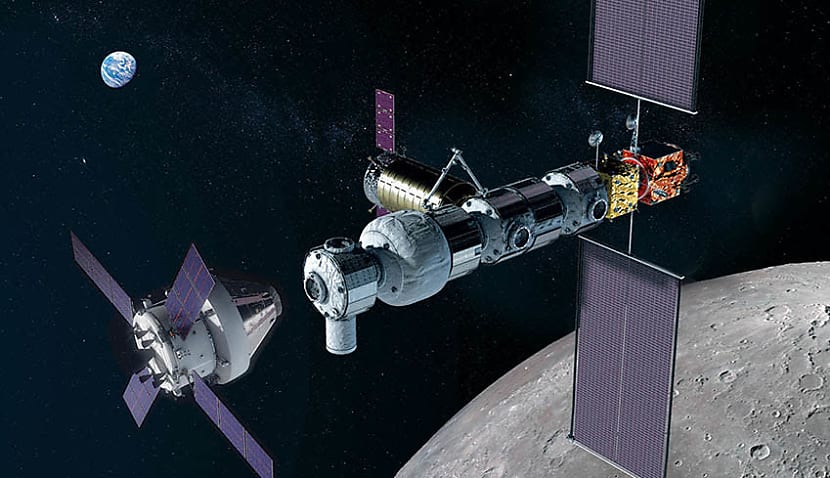
The company has handed over three 12-kilowatt Advanced Electric Propulsion System (AEPS) thrusters for the Gateway’s Power and Propulsion Element, which will operate in lunar orbit as part of NASA’s Artemis program. Once in service, the AEPS units will be the highest-power electric propulsion system to fly in space.
L3Harris said the thrusters will play a critical role in enabling the Gateway to reach and maintain its orbit around the moon, supporting Artemis IV astronaut missions travelling to and from the lunar surface.
Kristin Houston, president of space propulsion and power systems at Aerojet Rocketdyne, an L3Harris business, said electric propulsion offered major advantages for long-duration missions.
“Electric thrusters are far more fuel efficient than conventional chemical propulsion, which makes them ideal for Gateway and other deep-space missions,” Houston said. “When paired with nuclear power sources, this technology opens the door to new classes of exploration, from robotic missions to Jupiter and its moons to transporting large cargo payloads to Mars.”
Before delivery, the thrusters underwent an extensive test campaign, including vibration testing at L3Harris’ facility in Redmond, followed by hot-fire testing at NASA’s Glenn Research Center in Cleveland, Ohio. The testing confirmed performance and readiness for integration into the Power and Propulsion Element.
NASA’s Gateway is a central pillar of the agency’s plans for human exploration beyond low-Earth orbit. The lunar-orbiting outpost is designed to act as a manoeuvrable staging point to support sustained human presence in deep space, provide access to the moon’s surface and lay the groundwork for future missions to Mars.
As part of its evolving exploration architecture, NASA plans to launch the Gateway’s first two elements – the Power and Propulsion Element and the Habitation and Logistics Outpost – together on a single mission. Co-manifesting the launch reduces risk, lowers overall cost and allows the high-powered electric propulsion system to transfer both elements into lunar orbit.
Development of the AEPS technology has been led by NASA’s Glenn Research Center in partnership with the Jet Propulsion Laboratory, building on years of work to mature high-power Hall thruster technology for deep-space exploration.